Thinking about buying a condo or townhome near the Steamboat ski mountain and using it as a short-term rental? That can be a smart part of your purchase strategy, but only if you understand the rules before you buy. In Steamboat’s Mountain area, short-term rental potential depends on more than location alone. You need the city rules, HOA rules, and real-world income picture to line up. Let’s dive in.
What counts as a short-term rental?
In Steamboat Springs, a stay of fewer than 30 consecutive days is considered a short-term rental. That definition matters because it triggers local licensing, zoning, operating rules, and taxes.
If you are looking at a mountain-area property, it is easy to assume that ski proximity means nightly rentals are allowed. That is not always true. Steamboat uses an overlay system, and eligibility can change by zone and even by subzone.
How the city overlay works
The city’s short-term rental overlay was created to support resort and downtown lodging while limiting impacts on housing supply. Within that system, Green Zone is unrestricted, Yellow Zone is capped, and Red Zone prohibits short-term rentals.
For buyers near the ski mountain, the biggest takeaway is simple: do not assume every Mountain-area condo can be licensed for nightly rentals. The city identifies Yellow subzones such as Villas at Walton Creek, Shadow Run, Ski Ranches Townhomes, Walton Creek Condos, and Apres Ski Way Condos.
Know the three STR license types
Steamboat recognizes three short-term rental license types. Each one fits a different ownership pattern.
Standard STR license
A standard STR license is the category most buyers think about when they want a property used regularly for short stays. This is the license type that is most relevant if you are buying an investment-minded second home or condo with planned guest use throughout the year.
Hosted STR license
A hosted STR is limited to one guestroom up to 400 square feet while the owner or another permanent resident is present. This is not the same as renting an entire condo or townhome to guests.
Temporary STR license
A temporary STR applies only to a primary residence. It is limited to two occurrences and 30 cumulative days per calendar year.
For many mountain-area buyers, that means a temporary license will not match a true nightly-rental strategy. If rental income is part of your plan, you will want to confirm the license path fits your intended use.
Licensing basics buyers should know
The city states that it is unlawful to advertise or operate a short-term rental without a license. There is also no guaranteed grandfather clause for licensing, which is important if you are buying from an owner who has rented in the past.
Short-term rental licenses do not transfer with the sale of property. In other words, a seller’s active license does not automatically become yours at closing.
Review current application and renewal fees. Applications are handled through CityView.
Some resort-style developments in Green Zone may seek an exemption if they meet city requirements for on-site staffing and complaint response. Even so, buyers should verify whether a specific property qualifies rather than assume a building is exempt.
Yellow Zone caps can affect timing
If a property is in a capped subzone, timing matters. The city uses a lottery and waiting-list process when available licenses exceed issued licenses.
That can be a major issue if you are counting on short-term rental use right after closing. A property may be in an area where STRs are allowed in theory, but your ability to begin operating may still depend on license availability.
Legal nonconforming status matters too
Some properties may have legal nonconforming status rather than a standard license setup. The city notes that this status runs with the land, unlike a short-term rental license.
However, there is an important condition. The use must not have been abandoned in the prior 12 months. If you are evaluating a property based on past rental history, that detail deserves careful review.
Operating rules after licensing
Getting a license is only part of the picture. Once licensed, short-term rentals in the city must follow operating rules that can affect day-to-day use and guest experience.
Licensed units must display the license inside the property. They must also comply with occupancy and parking limits and have a designated local responsible party who can respond to complaints within one hour.
Parking and snow storage
Overnight parking outside a garage is capped at six vehicles. Vehicles must be parked on an all-weather drivable surface and outside public rights-of-way and emergency access easements.
In mountain-area communities, parking and snow storage can be a real operational issue. That is one reason the city requires a parking and snow storage plan as part of the application.
Complaint response
The city maintains a 24/7 short-term rental complaint hotline. That is a strong signal that enforcement is active.
For buyers, this means good management is not optional. Whether you plan to self-manage within the rules or use a local management setup, the one-hour response requirement should be part of your decision-making.
HOA rules can be stricter than city rules
This is one of the most important points for mountain-area condo and townhome buyers. A city license does not override HOA rules.
Colorado’s HOA framework allows associations to enforce rental and leasing restrictions when their governing documents permit it. An HOA may prohibit short-term rentals, set minimum stay requirements, limit parking or guest registration, and regulate use of amenities and common areas.
In practice, HOA rules often determine whether a unit can function as a true nightly rental. Even if city zoning allows STR use, the HOA may limit or block the kind of rental activity you expected.
HOA documents to request
Before you rely on rental income, ask for these documents:
- Declaration or CCRs
- Rules and regulations
- Amendments
- Board policies related to rentals
Pay close attention to provisions covering:
- Minimum stay requirements
- Rental caps
- Parking passes
- Amenity access
- Pets
- Noise
- Trash
- Guest registration
City limits or Routt County?
Not every mountain-adjacent property follows city rules. If a parcel sits outside Steamboat Springs city limits but within Routt County, you should not assume the city framework applies.
The city’s FAQ directs complaints outside city limits to Routt County compliance staff. Buyers should also remember that private rules, including HOA covenants, may still apply regardless of whether a property is inside the city.
Seasonality affects projections
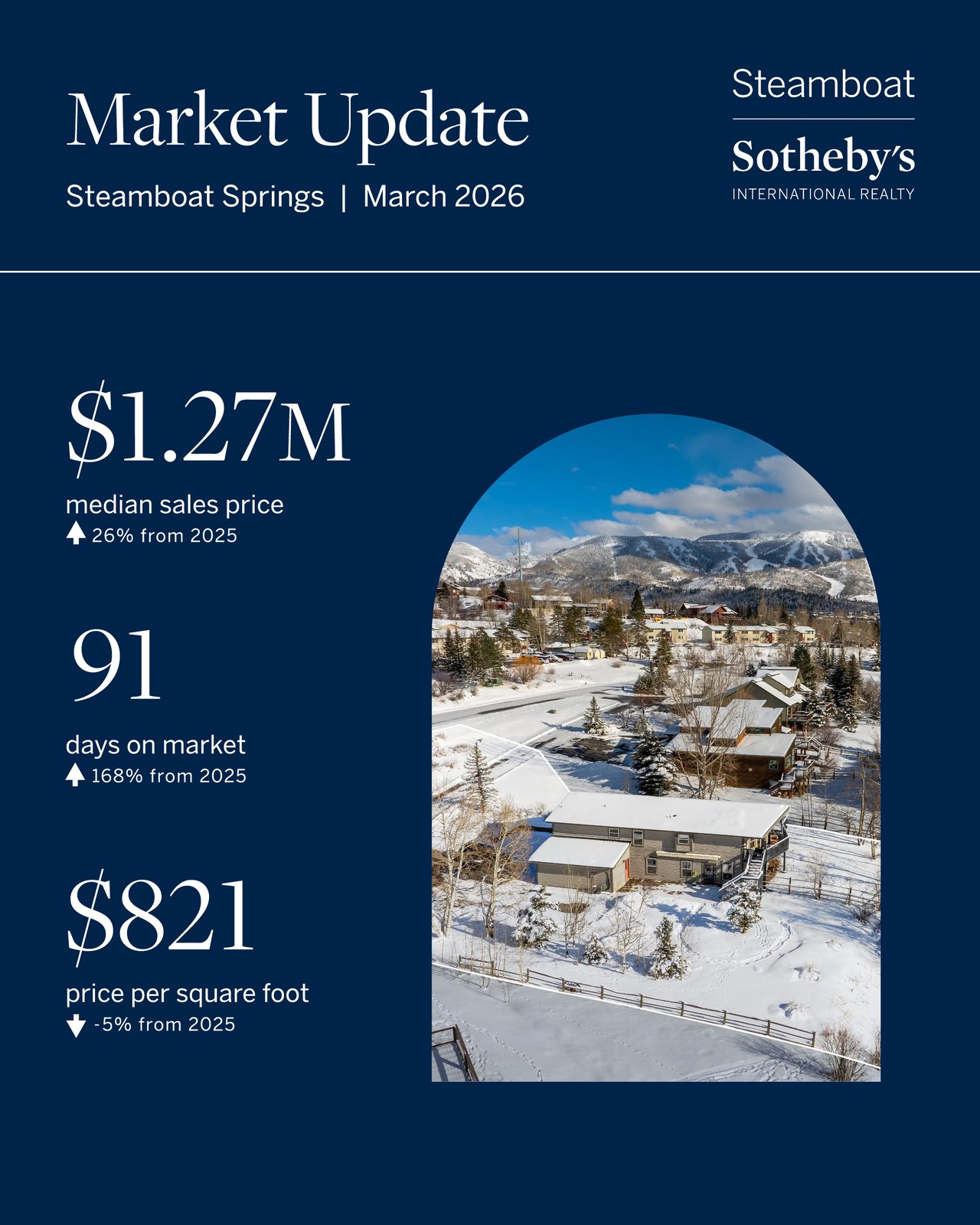
Steamboat is a seasonal visitor market, and income projections should reflect that. The Steamboat Chamber’s April 2026 dashboard showed total occupancy down 15% year over year, paid occupancy down 38%, and average paid occupancy at 7%, while average daily rate rose slightly.
The same dashboard notes that owner or unpaid stays do not contribute to accommodations tax or STR collections. In practical terms, a property with heavy personal use will usually generate less rental income than one that is consistently available to paying guests.
This does not mean a mountain-area purchase is a poor fit. It means you should model realistic occupancy, realistic expenses, and realistic owner-use patterns before calling a unit profitable.
Smart questions to ask before you buy
A good mountain-area purchase decision usually starts with a short list of specific questions. These are the ones that matter most:
- Is the address in Green, Yellow or Red Zone? VIEW INTERACTIVE MAP
- Does the property have an active STR license, legal nonconforming registration, or legacy VHR permit?
- If the property is in a capped subzone, is there a lottery or waiting-list issue?
- Does the HOA allow nightly rentals?
- Are there minimum-stay rules or rental caps?
- What are the parking, snow-storage, and guest-registration rules?
- Who will serve as the local responsible party?
- What taxes, dues, and management costs should be modeled?
- Is the property inside city limits or in Routt County?
What matters most in Steamboat’s Mountain area
If you remember one thing, make it this: short-term rental potential in Steamboat’s Mountain area is never just about finding the right condo near the slopes. You need municipal eligibility, HOA permission, and a realistic income model to work together.
That is where local guidance can make a real difference. In a resort market, the best opportunities often come from understanding the details early, before you write an offer or build your numbers around assumptions.
If you are weighing a mountain-area condo or townhome and want a grounded read on zoning, HOA fit, and purchase strategy, The Boyd & Berend Group can help you evaluate the opportunity with clear, local insight.
FAQs
What is considered a short-term rental in Steamboat Springs?
- In Steamboat Springs, a rental stay of fewer than 30 consecutive days is considered a short-term rental.
Can every condo near the Steamboat ski mountain be used as a nightly rental?
- No. Short-term rental eligibility depends on the property’s city zone or subzone, license availability in capped areas, and any HOA restrictions.
Do Steamboat short-term rental licenses transfer with the sale of a property?
- No. The city states that STR licenses do not transfer with the sale of property.
Can an HOA ban short-term rentals in Steamboat’s Mountain area?
- Yes. HOA rules may be more restrictive than city rules, and an association may prohibit or limit short-term rentals if its governing documents allow that restriction.
What should buyers review before relying on Steamboat rental income?
- You should confirm zoning, license type or availability, HOA rental rules, parking and operating requirements, taxes, dues, management costs, and realistic seasonal income assumptions.